Steering Systems Up Close: Bánki Students Visit the thyssenkrupp Development Centre 🚗
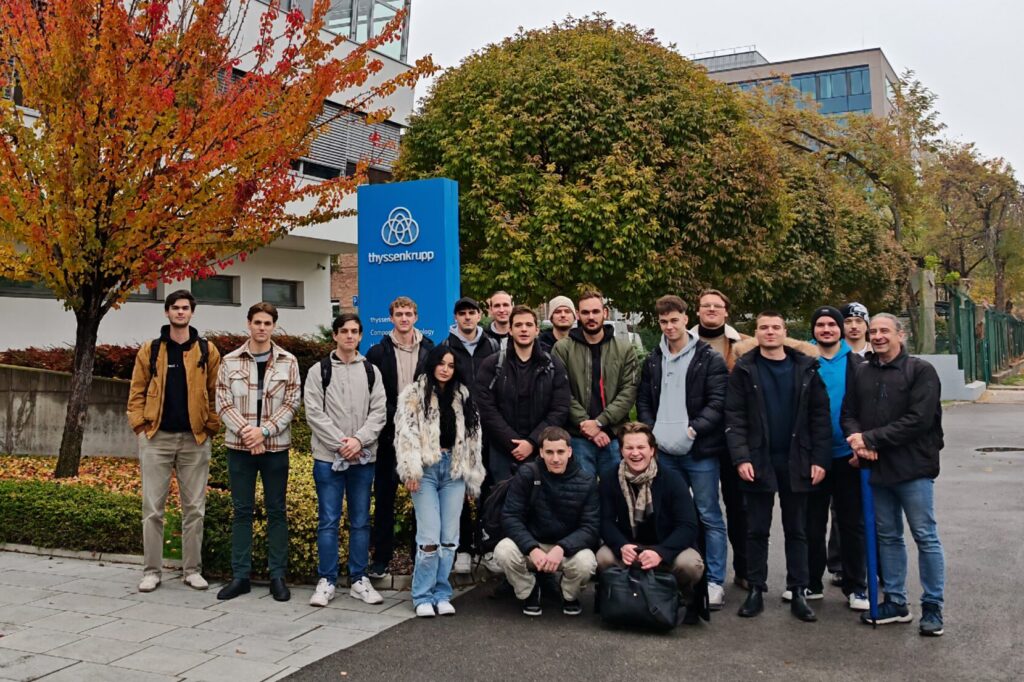
How are modern steering systems developed, and what tests are carried out to ensure their reliable operation throughout a vehicle’s entire service life? Twenty students from the Bánki Faculty had the opportunity to explore these questions during a professional visit to thyssenkrupp’s development centre in Budapest on 12 November 2026.
The visit was organised as part of the Vehicle Design and Construction course and brought together full-time BSc Mechanical Engineering students specialising in Vehicle Technology and Military Vehicle Technology. The programme was organised by Ábel Bokodi, a lecturer at the Institute of Mechatronics and Vehicle Engineering, and the group was also accompanied by Dr. habil. Tamás Szakács, another lecturer responsible for the course.
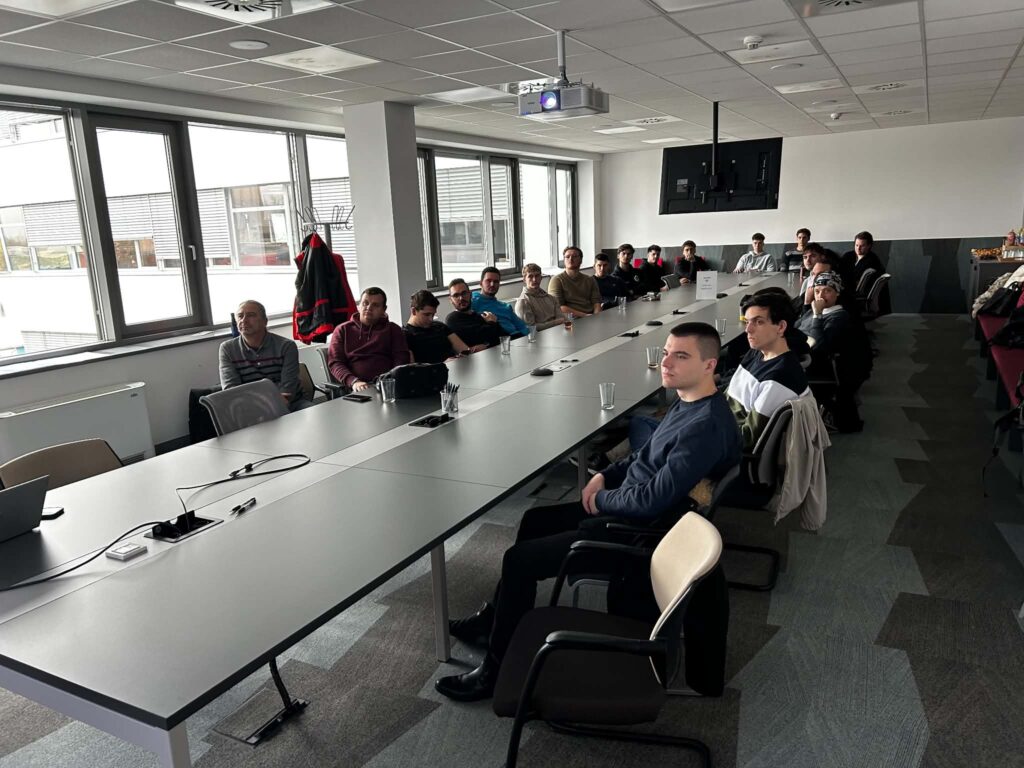
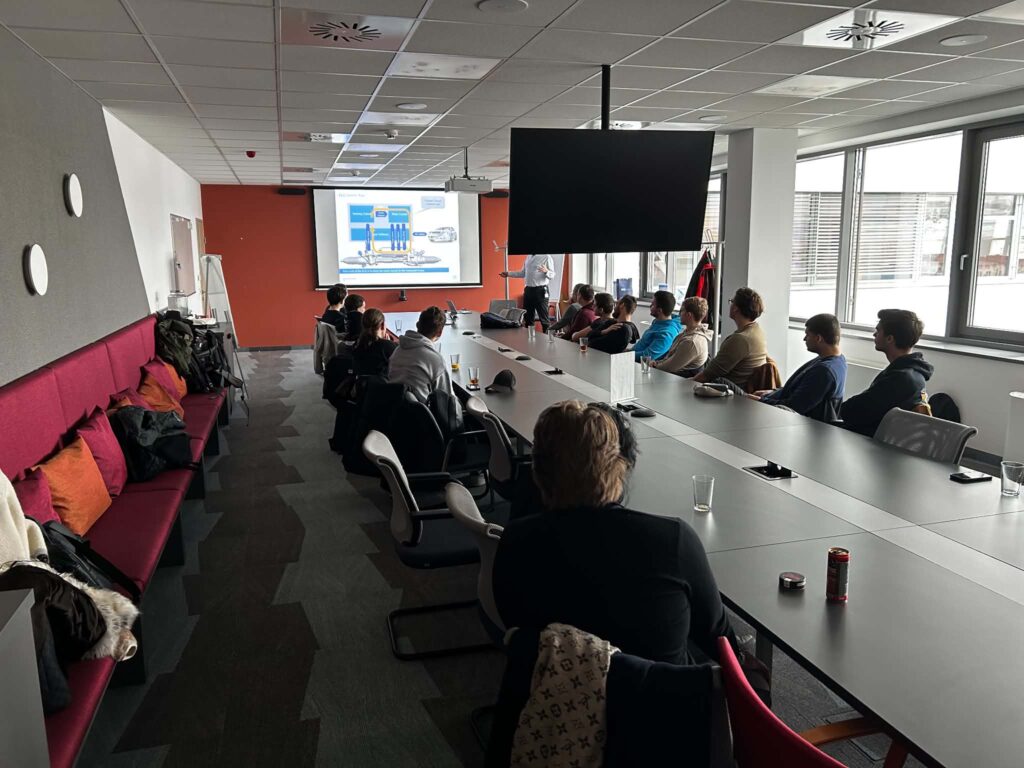
The programme began with a presentation by Dr. László Naszádos, who introduced the activities of the Budapest development centre. The facility focuses on the development of steering systems, the design of their control software, and durability and reliability testing.
As steering systems are one of the key topics covered in the Vehicle Design and Construction course, the visit provided an excellent opportunity for students to connect their theoretical knowledge with real-world industrial development processes.
The presentation was followed by a laboratory tour, during which participants gained insight into the testing procedures used for steering systems. They learned about the various tests conducted to verify the durability, reliability and operational safety of these components before they are installed in vehicles.
The interactive nature of the programme also gave students the opportunity to ask questions directly and engage in discussions with the development centre’s specialists.
We would like to express our sincere gratitude to Dr. László Naszádos and the thyssenkrupp team for their warm welcome and the valuable professional programme! We look forward to further opportunities for similar visits and professional cooperation in the future.